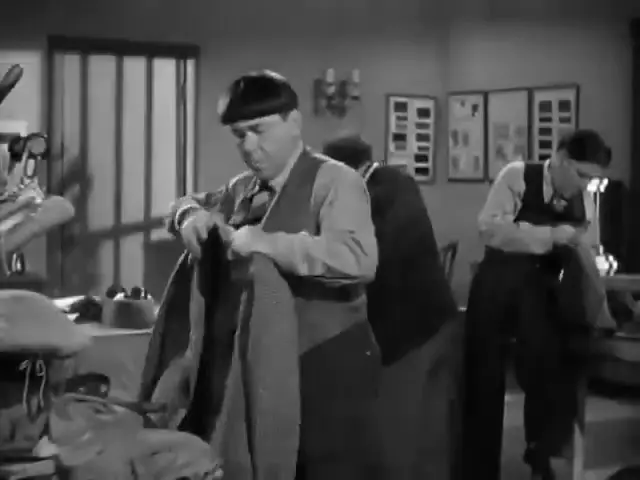
Step inside the courtroom where judicial order dissolves into pure, unadulterated pandemonium from the very first gavel strike.
In the 1936 cinematic short Disorder In The Court, Curly, Larry, and Moe deliver a masterclass in physical comedy that completely upends the traditional American courtroom drama.
The defendant, a dancer named Gail Tempest played by Diana Doremus, stands accused of m.u.r.dering Kirk Robin at the Black Bottom Cafe.
Her defense attorney calls upon three primary witnesses who happen to be none other than our legendary trio, Howard, Fine, and Howard.
Before a single question can be answered regarding the night of February 13th, the proceedings collapse under the weight of utter absurdity.
Curly stumbles into the courtroom looking for a dice game rather than a trial, instantly clashing with his partners over whether they were playing onesies or twosies.
The exasperated judge tries to restore dignity to the room, only to be addressed as judgey or woody by witnesses who treat the bench li,ke a neighborhood pool hall.
Taking the witness stand becomes an insurmountable obstacle course as Curly struggles repeatedly to take the oath correctly.
The judge demands that he remove his hat, raise his right hand, and place his left hand in position, initiating a dizzying cycle of overlapping commands.
Curly finds himself entirely baffled by the simplest instructions, mixing up his limbs, dropping his hat, and offering nonsensical gibberish in response to solemn legal inquiries.
When the judge asks if he solemnly swears to tell the truth, Curly fires back with double-talk that leaves the entire jury questioning reality.
Larry and Moe attempt to assist their companion, but their interference only deepens the confusion, turning the sacred oath into a comedic routine.
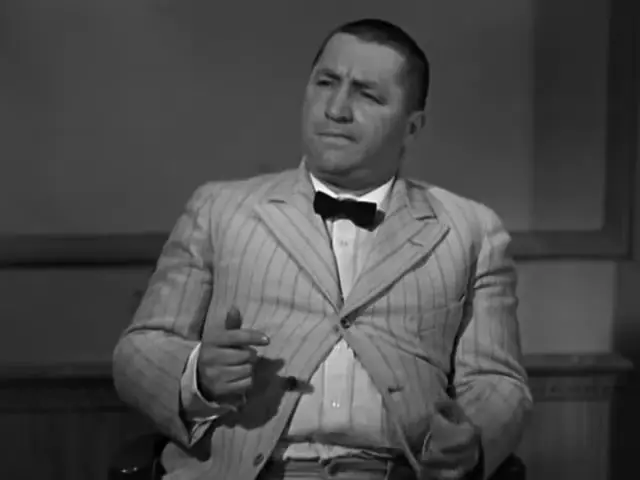
Once Curly finally manages to sit down in the witness box, the testimony regarding the fateful night descends into further theatrical madness.
Moe tries to keep the narrative focused on the m.u.r.der of Kirk Robin, but Curly insists on acting out the entire crime scene alongside his partners.
The courtroom transforms into an impromptu stage complete with musical instruments, flying props, and chaotic skirmishes that leave spectators ducking for cover.
Curly demonstrates how the victim was allegedly attacked, reenacting a struggle near a letter press with exaggerated movements and wild facial expressions.
The physical commotion escalates rapidly as violin strings snap, mallets swing, and the entire cast gets swept up in a whirlwind of slapstick violence.
Amidst the flying debris and shattered instruments, the defense attempts to prove that the defendant could never have pulled the trigger of a heavy revolver.
In a tense demonstration, Moe argues that the pistol is so stiff it would take the strength of a mule to fire, only to accidentally discharge a weapon that was supposedly unloaded.
The chaos reaches its absolute peak when a witness parrot enters the scene, prompting the Stooges to chase the bird across the courtroom rafters.
As feathers fly and judicial decorum is utterly obliterated, a note tied to the parrot ultimately reveals the true confession from Buck Wing.
The Stooges leave a trail of broken furniture, bewildered jurors, and unforgettable laughter in their wake, cementing their timeless status in cinematic history.
Audiences today continue to revisit this iconic courtroom disaster, marveling at how three comedic geniuses turned a m.u.r.der trial into an immortal masterpiece of chaos.
Watch full video here: